Holly Flower Bow Embroidery Design Review
As an embroidery designer who has spent years digitizing files for small business owners, I approach every new machine embroidery design with a critical eye. It is not enough for a file to look pretty on a screen; it must perform flawlessly under the needle and serve a strategic purpose for the brand using it. Recently, I evaluated the Holly Flower Bow Embroidery Design, a festive motif that promises to blend holiday charm with professional elegance. For boutique owners, Etsy sellers, and creative studios looking to elevate their seasonal offerings, this review breaks down how this design functions in real-world commercial applications.
First Impressions: Balancing Festivity and Professionalism
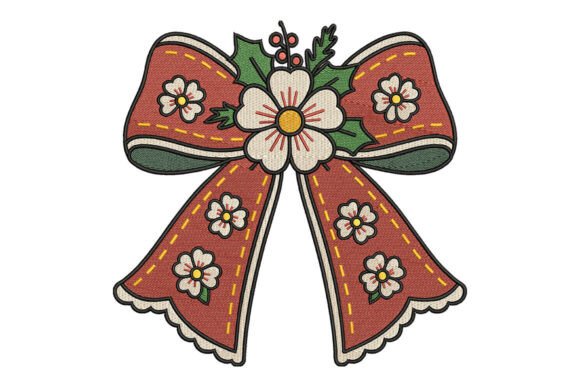
The immediate visual impact of the Holly Flower Bow Embroidery Design is one of refined warmth. Unlike cartoonish holiday graphics that can cheapen a brand’s aesthetic, this design features a red bow adorned with holly leaves, berries, and delicate white flowers. This combination suggests a classic, slightly rustic yet premium feel. For businesses in the bakery, florist, or handmade gift sectors, this visual personality is crucial. It signals attention to detail without overwhelming the viewer. The inclusion of white flowers adds a layer of sophistication that separates it from generic Christmas clipart, making it suitable for brands that value a curated, high-end appearance.
Strategic Applications for Small Business Merchandise
When considering how to integrate this digital embroidery file into your product line, versatility is key. Here is how this design performs across various Accessories and apparel items:
- Embroidered Patches: This is perhaps the strongest use case. The distinct shapes of the bow and holly leaves translate well to patch formats. You can produce these in batches and iron them onto tote bags, denim jackets, or beanies, creating instant small business merch that feels exclusive and handmade.
- Apron Embroidery: For cafés, bakeries, and florists, staff uniforms are walking billboards. Placing this design on the chest pocket or upper corner of an apron adds a seasonal touch that enhances customer experience. It feels welcoming and festive, reinforcing the brand’s hospitality.
- Cap Embroidery: A smaller version of this design works excellently on dad hats or structured caps. However, placement is critical. The curved surface of a cap requires careful digitizing to ensure the holly leaves do not distort. If the original file is optimized for flat surfaces, you may need to adjust the pull compensation.
- Tote Bag Design: Canvas totes are a staple for retail shops. Using this design as a central focal point or a corner accent adds value to a simple bag, turning it into a desirable custom apparel item that customers are proud to carry.
Navigating Technical Challenges in Production
While the aesthetic is strong, any experienced embroiderer knows that beauty does not guarantee ease of stitching. There are specific areas where the Holly Flower Bow Embroidery Design requires careful handling to ensure a high-quality finished product.
First, consider stitch density. Designs with dense foliage like holly leaves can become stiff if the digitizer has packed too many stitches into a small area. On lightweight fabrics, this can cause puckering. Always test the design on a scrap piece of your actual production fabric. If the area feels board-like, you may need to adjust the density or use a cut-away stabilizer for better support.
Second, pay attention to thread colors and contrast. The description mentions red bows, green holly, and white flowers. On dark uniforms, such as navy or black staff shirts, the white flowers will pop beautifully, but the red bow might lack definition if the thread shade is too dark. Conversely, on light-colored tote bags, ensure the green leaves have enough saturation to stand out. Running a test stitch-out in black and white first can help you identify if the design relies too heavily on color for definition, which is a risk for visibility in low-light settings or for customers with visual impairments.
Third, be mindful of hoop size limitations. If you are producing small patches or sleeve details, ensure the design scales down without losing the integrity of the delicate white flowers. Tiny details can get lost or turn into messy blobs if the design is reduced beyond its intended minimum size. Check the provider’s specifications for recommended minimum dimensions before committing to a large production run.
Enhancing Brand Identity and Customer Trust
Beyond the technical aspects, using a cohesive design like the Holly Flower Bow Embroidery Design strengthens your brand identity. Consistency in visual assets builds trust. When customers see the same high-quality embroidery on your packaging, your staff uniforms, and your social media printable mockup images, it reinforces professionalism. It shows that you care about the tactile experience of your products, not just the visual.
For Etsy sellers and crafters, this design can serve as a signature element. By incorporating it into limited-edition holiday collections, you create urgency and exclusivity. It transforms a standard item into a seasonal collectible. Furthermore, high-quality commercial embroidery signals durability. Customers associate well-executed stitching with longevity, which increases the perceived value of your handmade product and justifies a higher price point.
Practical Designer Notes for Implementation
Before you load this embroidery file into your machine for a client order or personal inventory, follow these essential steps:
- Verify Licensing: Confirm that the license allows for commercial use. Some designers permit physical sales but restrict digital redistribution. Ensure you are compliant before selling items featuring this design.
- Check File Formats: Ensure you have the correct format for your machine (e.g., PES, DST, EXP). Incorrect formats can lead to reading errors or distorted stitching.
- Create a Mockup: Use a printable mockup or digital overlay to show clients how the design will look on their specific garment. This manages expectations and reduces revision requests.
- Test on Fabric Texture: Fabric texture plays a huge role in the final look. Terry cloth will swallow small details, while smooth cotton will showcase them. Always run a test on the exact material you plan to use.
- Review Spacing: Inspect the spacing between the bow and the holly leaves. If they are too close, thread buildup can occur. If they are too far, the design may look disjointed at small sizes.
In conclusion, the Holly Flower Bow Embroidery Design is a potent asset for small businesses looking to add seasonal flair without sacrificing professionalism. Whether used for apron embroidery, branded patches, or holiday-themed tote bag design, it offers a blend of elegance and festivity that resonates with customers. By paying attention to technical details like stabilizer choice and thread contrast, you can ensure that this design enhances your brand identity and delivers a premium finished product that stands out in the competitive holiday market.